Gentaloka Where the strange becomes culture.

Gentaloka

Where the strange becomes culture.

Latest Articles

The Past That Never Happened: How a Generation Invented the Nostalgia They Needed
Aesthetic Trends

The Past That Never Happened: How a Generation Invented the Nostalgia They Needed

Millennials didn't just romanticize the 90s — they rebuilt it from scratch, filling in the gaps with vibes, grain filters, and collective yearning. The resulting aesthetic movements bear almost no resemblance to what actually went down, and somehow that's made them more powerful than the real thing. Welcome to nostalgia as fan fiction.

Built to Last, Gone by Tuesday: The Quiet Extinction of Hyperspecific Online Communities
Digital Culture

Built to Last, Gone by Tuesday: The Quiet Extinction of Hyperspecific Online Communities

The most passionate, tightly-knit corners of the internet are also the most disposable — at least as far as the algorithm is concerned. When platforms quietly reshuffle their recommendation logic, entire subcultures can vanish before their members even realize something's wrong. This is the story of who builds these spaces, what keeps them breathing, and why that breath is always borrowed.

Three Logos Deep: The Predictable Death Cycle of Every Internet Community's Visual Soul
Aesthetic Trends

Three Logos Deep: The Predictable Death Cycle of Every Internet Community's Visual Soul

Every niche online community follows the same eerie visual script: a scrappy hand-drawn logo, a mid-era glow-up nobody asked for, and a final corporate-ish redesign that killed the vibe entirely. These abandoned graphics aren't just bad design decisions — they're gravestones marking exactly when a community stopped being itself.

Confessing to the Con: How Saying 'I'm Fake' Became the Realest Hustle Online
Digital Culture

Confessing to the Con: How Saying 'I'm Fake' Became the Realest Hustle Online

There's a strange new currency circulating online, and it's built entirely from public admissions of inauthenticity. Creators who openly confess to performing, curating, and manufacturing their own relatability have discovered something wild: the confession is just another layer of the performance. And somehow, it pays better than the original act ever did.

Cringe Is Dead, Long Live Cringe: How Gen Z Turned Millennial Shame Into an Aesthetic
Aesthetic Trends

Cringe Is Dead, Long Live Cringe: How Gen Z Turned Millennial Shame Into an Aesthetic

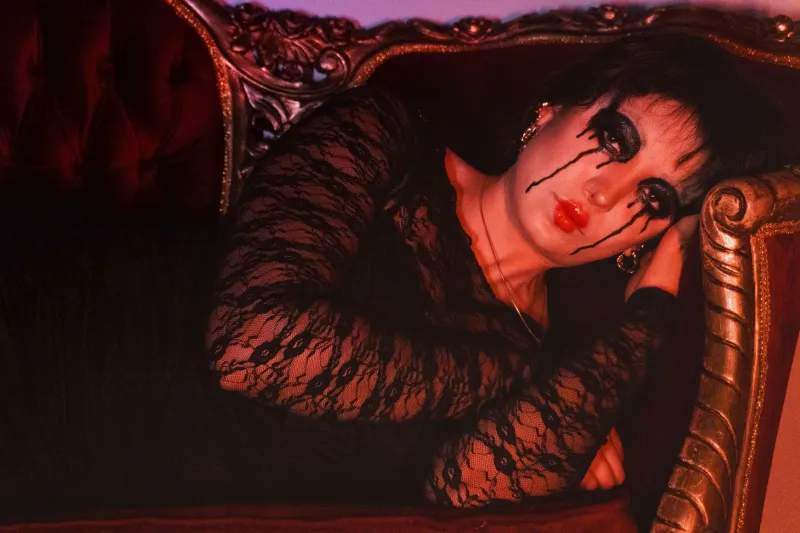
Gen Z is digging through the dumpster of early-2000s internet culture and pulling out all the stuff millennials spent years trying to forget. The question isn't why they're doing it — it's whether there's anything actually new happening, or if nostalgia is just capitalism in a raccoon-eye liner.

When the Subgenre Eats Itself: Inside the Infinite Fracture of Microculture
Digital Culture

When the Subgenre Eats Itself: Inside the Infinite Fracture of Microculture

Online communities are splitting into sub-subgenres so specific that even their founders can't keep up. What starts as a shared obsession becomes an incomprehensible tangle of in-jokes, aesthetic rules, and unwritten laws that expire within weeks of being written.

47 People and a Shared Obsession: Why the Smallest Internet Rooms Are the Most Alive
Digital Culture

47 People and a Shared Obsession: Why the Smallest Internet Rooms Are the Most Alive

Broad online communities are hemorrhaging the people who actually care about things. Gen Z and younger millennials are retreating into impossibly narrow subcultures—Discord servers with fewer members than a high school homeroom, subreddits dedicated to a single recording technique, group chats about one neighborhood's feral cat colony—and finding something the algorithm can't manufacture: genuine weirdness that belongs only to them.

Paying to Be Weird With Strangers: The Hidden Cost of Belonging to the Internet's Smallest Rooms
Digital Culture

Paying to Be Weird With Strangers: The Hidden Cost of Belonging to the Internet's Smallest Rooms

The most interesting corners of the internet now come with a cover charge. Ultra-niche online communities have figured out that exclusivity is a product — but somewhere between the Patreon tier and the verification quiz, the actual weirdness started leaking out.

Discovered, Packaged, Sold: The Short Life Cycle of a Community That Just Wanted to Be Left Alone
Digital Culture

Discovered, Packaged, Sold: The Short Life Cycle of a Community That Just Wanted to Be Left Alone

The moment a hyperspecific corner of the internet gets 'discovered,' a clock starts ticking. Brands, platforms, and trend forecasters move fast — and the community that built something real is usually the last to benefit. We're watching niche culture eat itself in real time.

Embarrassment Is the New Currency: How People Are Cashing In on Their Worst Online Selves
Digital Culture

Embarrassment Is the New Currency: How People Are Cashing In on Their Worst Online Selves

There's a growing cottage industry built entirely on the wreckage of old MySpace layouts, cringey DeviantArt posts, and deeply regrettable Tumblr phases. Millennials aren't burying their digital past anymore — they're auctioning it off. But when humiliation becomes a monetizable asset, who's actually winning?

We Started Writing Their Stories Before They Could: The Fan Fiction Industrial Complex of Real Life
Digital Culture

We Started Writing Their Stories Before They Could: The Fan Fiction Industrial Complex of Real Life

Somewhere between stanning and screenwriting, audiences stopped watching celebrity lives unfold and started drafting the scripts themselves. We've turned real humans into serialized protagonists, complete with redemption arcs we demand they follow. What does it mean when the public becomes the showrunner?

Rawness Has a Price Tag Now: The Slow Commodification of Being Real Online
Digital Culture

Rawness Has a Price Tag Now: The Slow Commodification of Being Real Online

Somewhere between the fifth Patreon tier promising 'unfiltered me' and the $200 therapy session branded around 'radical honesty,' authenticity quietly became a premium product. What started as a countercultural rejection of polish and performance has been repackaged, upsold, and sold back to us at a markup. This is how genuine self-expression became something only certain people can afford.

Obscurity Is the New Flex: Why People Are Paying to Be Left Out
Digital Culture

Obscurity Is the New Flex: Why People Are Paying to Be Left Out

The open internet promised everyone a seat at the table. Now the coolest thing you can do is flip that table over and charge admission to the back room. A new wave of deliberately exclusive online spaces is turning scarcity into a status symbol — and people are lining up to pay for the privilege of being filtered out.

The Gatekeepers Logged Off and Nobody Replaced Them: What Happens When Discord Runs Culture
Digital Culture

The Gatekeepers Logged Off and Nobody Replaced Them: What Happens When Discord Runs Culture

For decades, a handful of tastemakers decided what mattered. Then hyper-specific online communities ate their lunch — quietly, completely, and without sending a press release. The real question isn't whether that's good or bad. It's whether we even notice it's already over.

Getting Told to Leave Has Never Felt So Good: The Rise of Media That Despises Its Own Audience
Digital Culture

Getting Told to Leave Has Never Felt So Good: The Rise of Media That Despises Its Own Audience

Something strange is happening in the attention economy: the content people can't stop consuming is the content that openly doesn't want them. From gatekept subreddits to luxury brands that roast their own buyers, antagonism has become the era's most effective hook. Being excluded, it turns out, is the new VIP pass.

Weird Sells: The Billion-Dollar Pipeline From Fringe Subculture to Big Box Store
Digital Culture

Weird Sells: The Billion-Dollar Pipeline From Fringe Subculture to Big Box Store

The underground doesn't stay underground anymore — it gets acquired. How the hyperspecific communities that invented their own aesthetics, slang, and rituals became the most valuable R&D departments in consumer culture, without ever signing a contract or seeing a dime.

Your FYP Knows You Better Than Your Therapist — And That's the Problem
Digital Culture

Your FYP Knows You Better Than Your Therapist — And That's the Problem

TikTok's recommendation engine didn't just learn your preferences — it named them, sorted them, and handed you the receipt. Now a generation of users is caught between the comfort of being understood and the horror of being seen.

You Mourned Someone Who Never Knew Your Name: The Emotional Wreckage of the Parasocial Split
Digital Culture

You Mourned Someone Who Never Knew Your Name: The Emotional Wreckage of the Parasocial Split

When a beloved creator goes dark, retires, or implodes in controversy, millions of strangers feel something uncomfortably close to heartbreak. That feeling is real, it's valid, and it says something deeply weird about how the internet rewired human attachment. Here's what's actually happening when you grieve someone who never once thought about you.

Everything Is Good Now, Which Means Nothing Is: How the Algorithm Abolished Cultural Taste
Aesthetic Trends

Everything Is Good Now, Which Means Nothing Is: How the Algorithm Abolished Cultural Taste

Recommendation engines promised to connect everyone with exactly what they'd love — and they delivered. The side effect nobody predicted is that a generation raised on hyper-personalized feeds has lost the shared critical language that once defined what culture even meant. When the algorithm decides what's good, 'taste' becomes a glitch in the system.

Suffering Is the New Autograph: How Audiences Turned Celebrity Atonement Into a Spectator Sport
Digital Culture

Suffering Is the New Autograph: How Audiences Turned Celebrity Atonement Into a Spectator Sport

We used to want celebrities to sign our bodies. Now we want them to bleed a little in public first. The modern appetite for high-profile reckonings has evolved far beyond accountability into something weirder, more theatrical, and honestly kind of fascinating — a participatory ritual where the crowd gets to decide when the suffering is sufficient.