Cringe Is Dead, Long Live Cringe: How Gen Z Turned Millennial Shame Into an Aesthetic
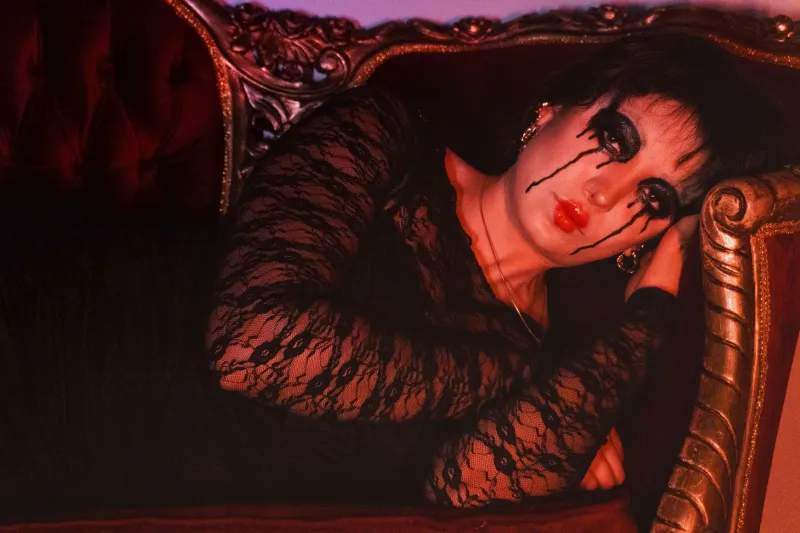
Somewhere right now, a nineteen-year-old is carefully arranging a MySpace-style layout on their Carrd page. Another one just posted a TikTok with a Paramore song underneath footage of their bedroom shrine to early-2000s band merch. A third is applying black eyeshadow with the kind of deliberate messiness that took their older siblings years to unlearn. None of them are embarrassed. That's the whole point.
Millennials spent roughly a decade in active recovery from their own adolescence. The LiveJournal confessionals, the chunky side-swept bangs, the "rawr xD" energy — all of it got buried under ironic detachment and then under genuine shame and then, eventually, under the careful aesthetic minimalism that defined millennial adulthood. Clean lines. Neutral tones. Carefully curated Instagram grids. The past was not a place you visited; it was a place you fled.
Gen Z looked at all that fleeing and said: actually, this is kind of cool.
The Dig
What's happening right now in the corners of TikTok, Tumblr's weird little resurrection, and niche Discord servers is less a trend and more an excavation. Younger users aren't stumbling onto emo aesthetics and scene culture by accident — they're actively researching them, archiving them, and then reconstructing them with the careful attention of cultural historians who also happen to be really into eyeliner.
The platforms themselves are part of the story. TikTok's algorithm, for all its chaos, has a soft spot for novelty-through-contrast. A seventeen-year-old posting a genuine My Chemical Romance tribute video gets traction precisely because it reads as unexpected. The sincerity lands differently when it comes from someone who has no social debt to the original era. They didn't live through the Hot Topic phase. They're choosing it. That choice is what makes it feel like something other than simple nostalgia.
And it's not just music. Entire visual languages are getting resurrected: the busy, layered webpage layouts that usability experts declared dead in 2009; the Myspace "about me" format with its lists of favorite bands and "who I am in 5 words"; the gif-heavy, emoticon-saturated communication style that feels almost alien after years of emoji minimalism. There are teenagers on Neocities building hand-coded websites that look like 2003 called back from the grave and given better typography.
The Self-Awareness Clause
Here's where it gets genuinely interesting, and where Gentaloka's whole reason for existing applies: this isn't cosplay. Or it's not only cosplay.
The Gen Z revival of millennial cringe comes loaded with a meta-awareness that the original participants never had access to. When someone in 2005 wrote an emo blog post about feeling misunderstood, they were just doing it. When someone in 2024 recreates that format, they're doing it and commenting on it and potentially critiquing it and maybe also just genuinely feeling it — all at the same time. The layers don't cancel each other out. They stack.
This is the thing that makes cultural recycling feel like more than recycling. The irony isn't distancing. It's load-bearing. The self-awareness is what allows the sincerity to survive. You can love something and know it's ridiculous and wear that knowledge openly, and the love doesn't become less real. If anything, it becomes more honest.
Millennials didn't have that option. They were inside the thing. Gen Z gets to be inside it and outside it simultaneously, which is either a form of cultural sophistication or the inevitable result of growing up with the entire internet's history available as a searchable archive. Probably both.
The Capitalism Question
Now for the part that's harder to be enthusiastic about.
Every time a subculture or aesthetic moment gets revived, there's a window — usually a pretty narrow one — before the market notices and moves in. We've watched this happen so many times that the pipeline is basically predictable: niche community discovers or revives something → it gets documented on social media → algorithm amplifies it → brands start producing product → the thing is now at Target.
Scene and emo aesthetics are already well into this cycle. Hot Topic, which spent years trying to rebrand away from its 2005 peak, has been quietly leaning back into that identity. Spencer's never really left. More tellingly, fast fashion brands are producing "Y2K" and "scene" collections that flatten the aesthetic into sellable units — the chunky platform shoes without the band tee, the raccoon eyeliner without the context.
The question is whether that flattening kills what's actually interesting about the revival. And the answer, frustratingly, is: sometimes yes, sometimes no, and it depends almost entirely on which communities you're looking at.
The kids on Neocities building hand-coded tribute pages to their favorite bands are not being reached by the Target collection. The TikTok trend, though — that's already halfway to the mall. The speed at which aesthetic movements get absorbed has accelerated to the point where you can almost watch it happen in real time, which creates this strange situation where the genuine underground revival and the commercial facsimile of it exist simultaneously, each pointing at the other as evidence of the other's inauthenticity.
What Regeneration Actually Looks Like
Here's a useful distinction: nostalgia and regeneration aren't the same thing, even when they look identical from the outside.
Nostalgia is about returning to something because you miss it. Regeneration is about taking something and making it do new work. The millennial cringe revival, at its most interesting, is regenerative. It's not about mourning the early internet. It's about using the aesthetic vocabulary of that era to say something about now — about the sterility of algorithmic content, about the loss of personal web space, about the desire for digital environments that feel human and messy and specific.
A hand-coded Neocities page that looks like 2003 is not trying to go back to 2003. It's using 2003's visual language to resist 2024's design homogenization. That's a political act, even if it's wearing a studded belt.
The emo makeup revival carries similar weight. Millennials wore it in a context of being told they were too much, too dark, too dramatic. Gen Z is wearing it in a context of having watched the wellness-industrial complex try to smooth everyone into palatable softness. The heavy eyeliner means something different now. It lands in a different cultural moment and picks up that moment's meaning.
The Verdict, Which Is Not Really a Verdict
Is Gen Z's millennial cringe revival genuine cultural regeneration or just capitalism finding new angles on old shame? It's both, running in parallel, and which one you're witnessing depends entirely on where you're looking.
The underground version is doing something real. The commercial version is doing something profitable. These two facts coexist without resolving each other, which is just how culture works, and has always worked, and will continue to work until the next thing gets excavated and argued about.
What's actually new here is the speed, the self-awareness, and the access. A teenager in rural Ohio can now participate in a niche aesthetic revival with the same fluency as someone in a major city, because the archive is shared and the tools are free. That democratization of cultural participation is genuinely interesting, even when the thing being participated in is someone else's embarrassing past.
The cringe was always going to come back. The only surprise is how unbothered everyone is about it — and how that unbotheredness might be the most radical thing of all.