3 AM Has Its Own Algorithm and It Knows Exactly What You're Afraid Of
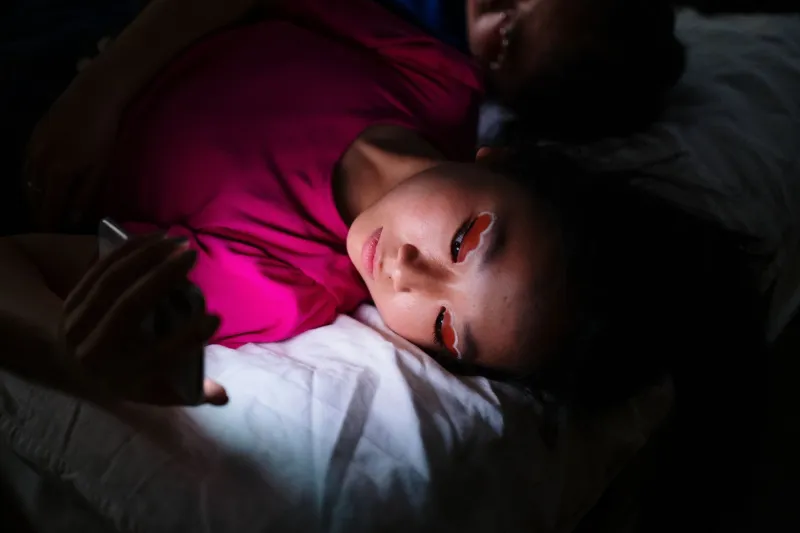
It's 3:17 AM. You've been awake for two hours longer than you intended. You started on YouTube watching a video essay about something reasonable — urban planning, maybe, or the history of a fast food chain — and somehow you are now forty minutes into a documentary about a town in rural Nevada that was abandoned overnight in 1954 and nobody fully agrees on why. You are not tired. You are, in fact, more awake than you were at noon.
This is not an accident.
The Architecture of the Late-Night Trap
Streaming platforms and social media companies have spent years refining what their engineers politely call "watch time optimization" and what the rest of us might more accurately call "making it impossible to stop." But the truly sophisticated version of this — the one that doesn't get talked about enough — is the way these systems adapt to when you're watching, not just what.
Your 11 PM behavior looks different from your 2 AM behavior, and the algorithm knows this. The content that keeps you engaged at 2 AM is not the content that kept you engaged at 7 PM. It's stranger. It's more specific. It leans into anxiety, into mystery, into the specific emotional register of someone who is slightly dissociated from the social contract of daylight hours. The platforms have modeled this. They serve accordingly.
This isn't speculation — it's visible in the data that researchers have started pulling from recommendation systems. Late-night recommendation queues skew measurably toward longer-form content, toward unresolved narratives, toward content that raises questions it doesn't fully answer. The algorithm has learned that a person who is already awake past midnight is in a fundamentally different psychological state than a person browsing during their lunch break, and it exploits that difference with remarkable precision.
The 3 AM Community Is Real and It's Growing
Here's the thing that the platform engineers probably didn't fully anticipate: the people being kept awake by the algorithm found each other. And they built something.
The "3 AM community" isn't a formal thing, but it's everywhere once you know to look for it. It's the comment sections on YouTube videos posted between midnight and 5 AM that have their own distinct culture — more confessional, more raw, more likely to veer into genuine emotional disclosure. It's the Twitter (fine, X, whatever) threads that only happen after midnight, where the social performance of daytime posting drops away and people just say the actual thing they're thinking. It's the subreddits that are technically active all day but only really alive between 1 and 4 AM Eastern, when the specific loneliness of being awake when you shouldn't be creates a kind of temporary intimacy.
There's a reason people describe these spaces as feeling different. They are different. The population online at 3 AM self-selects for people who are either working strange hours, dealing with insomnia, or have simply made the choice — consciously or not — to opt out of the next day's functioning in favor of one more hour of not being alone with their thoughts. That's a specific kind of person in a specific kind of state, and the communities they form reflect that.
Doom-Scrolling as Ritual, Not Failure
The cultural conversation around late-night scrolling has been almost entirely framed as pathology. You're doom-scrolling. You have no self-control. You're going to ruin your sleep hygiene and your cortisol levels and your ability to concentrate tomorrow. All of that is probably true. It's also a weirdly incomplete picture of what's actually happening.
For a lot of people — particularly people who live alone, people dealing with anxiety, people whose daytime lives don't leave much room for unstructured thought — late-night scrolling functions as something closer to a ritual than a failure. It's the one part of the day when nobody needs anything from you. The work is done. The social obligations are done. The performance of being a functional adult is suspended. And in that suspension, people go looking for things that feel true in a way that curated daytime content doesn't.
The abandoned-building documentaries. The deep dives into obscure historical events. The long Reddit threads about strange personal experiences. The video essays that meander for ninety minutes without reaching a conclusion. These aren't random choices — they're the content that matches the emotional register of 3 AM, which is: unresolved, slightly eerie, honest about the fact that most things don't have clean endings.
The platforms didn't create this desire. They just learned to feed it, and then monetized the feeding.
Who's Actually Profiting From Your Insomnia
Let's be clear about the economics here, because they're worth understanding. Every additional hour you spend on a platform past the point where you intended to stop is pure revenue. The ads don't know it's 3 AM. The subscription fee doesn't care that you're going to feel terrible tomorrow. The engagement metrics go up, the quarterly report looks good, and the fact that you're running on four hours of sleep is entirely your problem.
The insomnia economy is worth real money. Sleep-related product advertising — apps, supplements, mattresses, white noise machines — targets late-night browsers specifically, because late-night browsers are demonstrably the most receptive audience for products promising to fix the exact problem the platform is causing. It's almost elegant in how circular it is. Keep you awake, sell you the cure, keep you awake again.
And the content creators who thrive in this ecosystem have figured out the formula. Long. Unresolved. Quietly unsettling without being actively scary. Specific enough to feel like a secret. The most successful late-night YouTube channels have viewer retention curves that look completely different from daytime content — people watch longer, rewatch more, and are significantly more likely to follow through to the next video. The algorithm rewards this and recommends more of it and the cycle deepens.
The Part That's Actually Interesting
Here's what gets lost in the discourse about screen time and sleep hygiene: the 3 AM internet has produced some genuinely remarkable things. The communities that form in that specific loneliness are often more honest than anything that happens during daylight hours. The creative work that gets made for and by late-night audiences tends to be weirder, less polished, and more willing to sit with discomfort than content optimized for peak-hour engagement.
There's a version of this conversation that acknowledges the exploitation and still makes room for the fact that the experience of being awake at 3 AM with a thousand other people who are also awake at 3 AM is, genuinely, a specific kind of human connection that didn't exist before the internet made it possible.
The algorithm is absolutely using your insomnia against you. It is also, in the process, building something strange and kind of beautiful in the margins. Both things are true. Welcome to the night shift.