The Bots Learned Our Accent and Now the Subculture Sounds Wrong

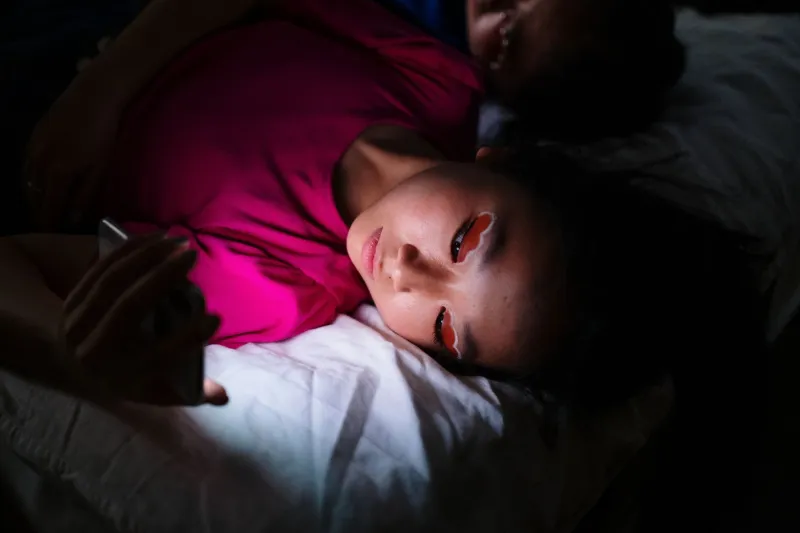
Photo by Photo by De An Sun on Unsplash on Unsplash
Ask anyone who's been inside a small fandom long enough and they'll tell you about the smell test. It's the thing you can't define until it's off — a turn of phrase, a joke that lands a half-beat late, a theory that's too tidy. You read three paragraphs and something in your brain says: this wasn't made by one of us.
In 2026, the smell test is firing constantly, and it's making people a little paranoid.
The slow flood
Nobody remembers exactly when it happened, because there was no announcement. Just a gradual shift in the texture of things. The fanfic tags that used to be curated by obsessive humans started filling with competent, frictionless prose that had no fingerprints on it. The meme accounts with 4,000 followers and oddly regular posting schedules. The Discord servers that were fully staffed with bots doing warm, welcoming small talk at 3 a.m. to a channel of eleven people.
None of this looked like an invasion. It looked like convenience. That's what made it effective.
Here's the part that stings: AI is very good at the shallow layer of a subculture. It can absorb the vocabulary, mimic the formatting, reproduce the in-jokes at the right frequency. What it can't do is care about the thing the in-jokes were about. So what you get is a copy of the surface with nothing underneath — a haunted house version of a community. The building is standing. The lights are on. Nobody's home.
Slop is the new normie
There's a word people throw around now that's done a lot of work: slop. It's not a technical term. It's an accusation, and like all accusations it's a little unfair and a little precise.
What slop actually describes isn't 'AI content.' It's content with no stake. The stuff made because a pipeline exists, not because anyone needed to say something. And here's the uncomfortable class dimension: a teenager using a generator to write the fanfic they couldn't articulate on their own is not the same as a content farm flooding a tag with 800 variants of it. One of those is a person reaching for expression. The other is weather.
But from inside a small community, the two arrive through the same door, and the door gets bolted shut for both.
The weirdos start leaving
The first signs of retreat were subtle. People stopped posting their best work in public tags and started sending it directly to friends. Group chats became more active than forums. Somebody made a Discord that required a human vouch to enter — no invite links, no public listing, and a verification question with an answer so specific you'd have to have actually been there.
That's gatekeeping, and for the last decade or so gatekeeping was the villain of internet discourse. In 2026 a lot of people are quietly rewriting their position on it. When the cost of entry is a captcha, openness is a vulnerability. Small rooms are closing the windows.
You can see it in the aesthetics too. There's a visible return to seams — pencil marks left in, compression artifacts left alone, spelling errors kept, art that clearly cost somebody a wrist and an evening. People are tagging their work with 'human-made, unedited' the way restaurants put up a sign about local sourcing. Provenance as a feature.
What's left that's still strange
The interesting part is where the strangeness survived. It's in the ugly places. 200-message group chats about an obscure 1980s regional television show. Zine swaps conducted through the mail, actual paper, actual stamps. A private wiki that's about 60 pages long and has been edited by four people since 2019. A forum with 47 members where the average post is 900 words long and nobody has ever mentioned monetization.
These pockets are uncolonized because there's nothing to extract. No scale, no audience, no funnel. Which means the machine has no reason to come, which means the people inside get to keep being weird in peace.
That's an uncomfortable conclusion if you believe the internet should be open and inclusive and free. But open and inclusive and free is precisely what got strip-mined. The remaining pockets of human strangeness are small, slightly defensive, and increasingly private — not because they hate newcomers, but because they've learned what arrives before the newcomers do.
The smell test is still working. That's the good news. It just costs more to be sure now.