Confessing to the Con: How Saying 'I'm Fake' Became the Realest Hustle Online
Somewhere between the fourth sponsored post and the tearful "I need to be honest with you guys" video, something broke open in the creator economy. Not collapsed — broke open, like a piñata full of money and moral ambiguity. The confession of inauthenticity, the dramatic pulling-back of the curtain, the vulnerable admission that yes, this whole thing has been a performance — it turned out to be the most lucrative move in the entire playbook.
And nobody seems to know what to do with that.
The Apology Arc Is a Genre Now
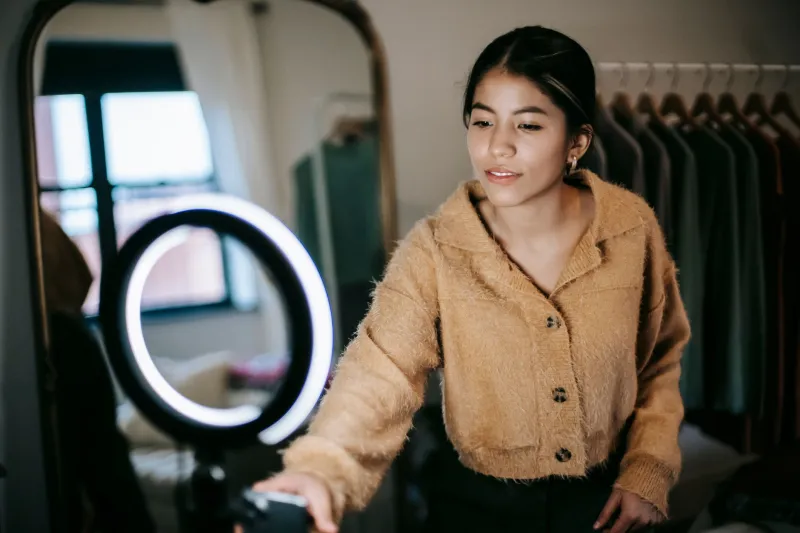
Let's be real about what we're actually watching when a creator goes viral for "finally being honest." There's a recognizable structure to it. The long pause before speaking. The no-makeup aesthetic. The soft, natural lighting that took forty-five minutes to set up. The voice that cracks at just the right moment. This is not raw humanity leaking through a screen — this is craft. Extremely refined, psychologically calibrated craft.
The irony is that audiences know this. They've watched enough of these videos to recognize the beats. And they watch anyway, engage anyway, subscribe anyway — sometimes more enthusiastically than before. Which means either audiences are being fooled, or they've collectively agreed to participate in a fiction they find more satisfying than whatever "genuine" content would even look like at this point.
My money's on the second one.
What we're seeing is the maturation of a media-literate audience that has essentially given up on the idea of unmediated authenticity and started enjoying the performance of authenticity as its own distinct art form. It's not cynicism exactly. It's more like the way people watch professional wrestling — fully aware of the choreography, emotionally invested anyway, and weirdly offended if you try to explain why they shouldn't be.
Meta-Fakeness as Brand Identity
The really fascinating case studies aren't the creators who got caught being fake and then pivoted to transparency. Those people are just doing damage control with good lighting. The more interesting phenomenon is the creator who led with the admission — who built their entire brand around the premise that they were going to show you the machinery.
Think about the influencer who posts a side-by-side of the "real photo" versus the posed one, then sells a preset pack for $28. Or the YouTuber whose entire channel is deconstructing influencer culture — complete with mid-roll ads for HelloFresh. Or the TikToker who does ironically cringe content that's so precisely calibrated it could only have been made by someone who understands sincerity deeply enough to weaponize its absence.
These aren't people who stumbled into meta-commentary. They built a business model on it. And the business model works because the audience gets to feel smart. Watching someone deconstruct the performance makes you feel like you're in on the joke, which is a fundamentally different emotional experience than being sold to — even when you're being sold to at the exact same time.
That feeling of insider knowledge? That's the product. The brand deal is just the invoice.
The Paradox Nobody Wants to Solve
Here's where it gets genuinely strange, and genuinely worth sitting with: there is no exit from this loop. Once you understand that confessing to performance is itself a performance, you might think the logical move is to not confess — to just be straightforwardly fake without the meta-layer. But that's already been done, and audiences rejected it as too naive. Or you could try being genuinely, radically unperformed, but that tends to look like a badly lit video with no hook, and the algorithm buries it in six minutes.
Every escape route from the authenticity trap leads back into it. Sincerity reads as a bit. Irony reads as sincerity. Confessing reads as performing. Refusing to confess reads as suspicious. The only people who seem comfortable in this space are the ones who've stopped treating it as a problem to be solved and started treating it as the actual terrain — weird, recursive, and kind of hilarious if you don't fight it.
Some creators have leaned into this so completely that their content is basically a live demonstration of the trap itself. They'll post something earnest, then immediately post a video analyzing why they posted something earnest, then respond to comments about whether the analysis was sincere. It's turtles all the way down, and the engagement numbers are fantastic.
What Audiences Actually Want (Hint: Not Authenticity)
The deeper you dig into this, the more the word "authenticity" starts to feel like a red herring. What audiences seem to actually want is connection — and it turns out that connection can be manufactured just as effectively through a well-executed vulnerability performance as through actual vulnerability. Maybe more effectively, because the manufactured version is paced better and doesn't overshare.
This isn't new, exactly. Celebrities have been performing relatability since the invention of the celebrity. What's new is that the audience has become sophisticated enough to name the performance, and creators have become sophisticated enough to monetize the naming. It's a second-order market built on top of the first one, and it's generating real revenue.
The creators who are thriving in this environment share one quality: they're genuinely comfortable with the contradiction. They're not tormented by the question of whether they're being real. They've accepted that "real" is a moving target, that performance and person are not as separable as we'd like, and that the audience showing up every day is making a choice to be there regardless. That acceptance, paradoxically, reads as the most authentic thing about them.
So Where Does That Leave Us
Probably somewhere uncomfortable, which is kind of where Gentaloka lives anyway.
The authenticity economy didn't fail. It evolved. It ate its own premise and found out the premise tasted fine, actually — maybe better processed than raw. What we're left with is a content landscape where the most "honest" creators are running the most sophisticated long cons, and the audience is in on it, and everyone is making money, and nobody can quite agree on whether this is a dystopia or just Tuesday.
Maybe the strangest part is that this recursive fakeness has produced some genuinely interesting art. Creators interrogating the performance have made content that's more self-aware, more formally inventive, and more culturally honest than most of what came before it — even if the cultural honesty in question is "we are all performing all the time and the sooner you accept that the sooner we can get to the sponsored segment."
The con is real. The confession is real. The profit is definitely real. Whether any of that adds up to authenticity is a question you can spend a long time on, and a lot of creators are betting you will.