Weird Sells: The Billion-Dollar Pipeline From Fringe Subculture to Big Box Store
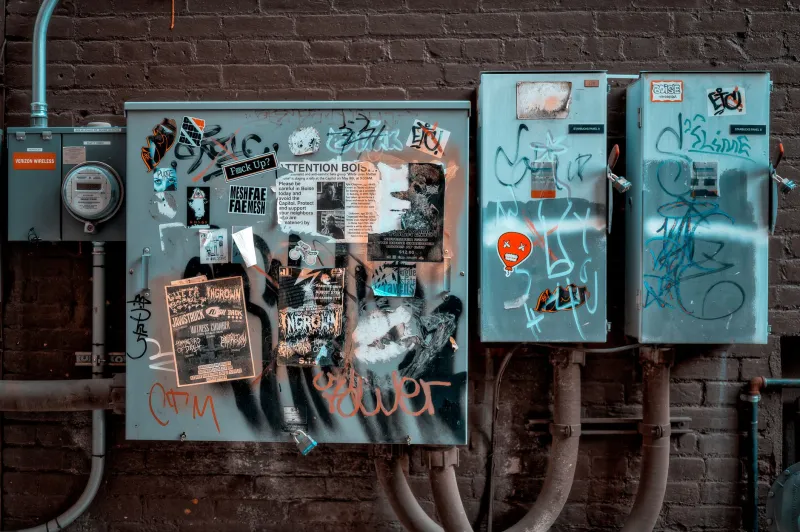
There's a Discord server — you've probably never heard of it, and that's exactly the point — where a few hundred people spend their days cataloguing a very specific kind of found object: mid-century industrial signage with hand-painted serif fonts. They have their own vocabulary for it. They rate finds on a ten-point scale. They argue, passionately, about what counts as authentic versus what's a reproduction. It is deeply, beautifully weird.
Two years after that server hit its stride, Urban Outfitters released a home goods line built almost entirely around that exact aesthetic. No credit. No collaboration. Just vibes, laundered through a mood board and a product development cycle.
This is not a coincidence. This is the economy now.
The $50 Billion Weird Tax
Analysts who study the so-called "passion economy" have been quietly tracking something uncomfortable: the financial infrastructure of mainstream consumer culture is now almost entirely dependent on the unpaid creative labor of niche communities. Estimates vary, but the market value of products and trends that can be traced directly back to subcultural origins — streetwear, micro-aesthetics, collector culture, alt-wellness, tabletop gaming, indie food movements — clears $50 billion annually in the US alone when you follow the whole supply chain.
The communities that generated the original cultural signal? They largely see none of it.
What's changed in the last decade is the speed and precision of the extraction. Brands used to wait years for a subculture to bubble up into the mainstream before they moved in. Now, with social listening tools, trend forecasting AI, and a generation of marketing directors who grew up terminally online, the lag time between "weird Discord thing" and "Target endcap" has collapsed to somewhere between six and eighteen months. Sometimes less.
The pipeline is ruthlessly efficient. It just doesn't pay the people who built it.
How the Extraction Actually Works
It would be easier to be angry about this if the process were more obviously villainous. But it's not a heist — it's more like osmosis, and that's what makes it so hard to push back against.
Here's the rough anatomy: A micro-community forms around something hyperspecific — a visual language, a set of references, a way of dressing or decorating or eating. The community develops internal logic, in-jokes, standards of taste. It is, in the truest sense, a culture. Small brands, often run by people adjacent to or inside the community, start producing objects that speak to that culture. Those objects circulate on social media. A trend forecaster screenshots them. A brand deck gets made. A licensing deal or a straight-up knockoff follows.
The community watches their thing become a thing and feels a particular flavor of grief that doesn't have a clean name yet. Something between flattery and violation.
Goblincore went through this. Cottagecore went through this. The dark academia crowd watched their carefully curated thrift-store sensibility get repackaged by Amazon in about fourteen months. Even the deliberately ugly, aggressively anti-commercial aesthetics — normcore, blokecore, "recession-core" — got commodified almost before they finished forming.
The algorithm doesn't care about intent. It only sees signal.
The Authenticity Paradox
Here's where it gets philosophically uncomfortable: the thing brands are actually buying isn't the aesthetic. It's the authenticity of the aesthetic. And authenticity, by definition, cannot survive the transaction.
Consumers in 2025 are sophisticated enough to know when they're being sold a vibe versus when they're encountering the real thing. The entire value proposition of subcultural capital is that it signals genuine membership in something — a real community with real stakes and real gatekeeping. When a brand packages that signal and sells it at scale, the signal degrades. The people who cared most about the original thing feel cheapened. And the people who bought the mass-market version never quite get the full hit they were promised.
Everyone loses something, and yet the quarterly earnings look great.
This is the weird economy's central contradiction: it runs on authenticity while systematically destroying it. Brands need the underground to keep generating new raw material, which means they have a structural interest in subcultures existing and thriving — right up until the moment they extract value from them and move on.
The Communities That Saw It Coming
Some subcultures have started building in defenses. Not always consciously, but the behavior is there.
Highly technical hobbies — competitive tabletop wargaming, certain corners of mechanical keyboard culture, serious amateur mycology — have developed layers of complexity that are genuinely hard to fake or flatten into a product. The barrier to entry is real knowledge, not just the right aesthetic accessories. Brands can sell the surface, but they can't sell the depth, and the depth is where the community actually lives.
Other groups have leaned into deliberate obscurity. Keeping things off the major platforms. Staying in invite-only spaces. Treating virality as a threat rather than a goal. There's a growing contingent of online weirdos who treat discoverability as the enemy of culture — and honestly, they're not wrong.
Then there are the communities that have tried to monetize themselves before the brands get there. Patreon-funded micro-media, community-owned brands, collective licensing agreements. The results are mixed, but the instinct is sound: if the weird is going to be worth money, the weird people should probably see some of it.
What This Means for the Rest of Us
If you've ever felt the particular deflation of watching something you loved get a Target collaboration, you already understand the stakes intuitively. But the implications run deeper than personal taste.
Subcultures are, among other things, laboratories for social possibility. They're where new ways of dressing, eating, relating, and making meaning get tested before they're ready for prime time. When the extraction pipeline shortens the runway between invention and commodification, it puts pressure on the very conditions that make invention possible. Communities need time to develop. They need obscurity. They need the freedom to be wrong and weird and unfinished.
The weird economy is, in a very real sense, eating its own seed corn.
And yet — and this is the part that keeps the whole machine running — people keep making weird things in weird corners of the internet. The Discord servers keep forming. The micro-aesthetics keep evolving. The hyperspecific obsessions keep finding each other.
Maybe because the weirdness was never really about the aesthetic objects. It was about the community. And you can't put that on an endcap.
At least not yet.